

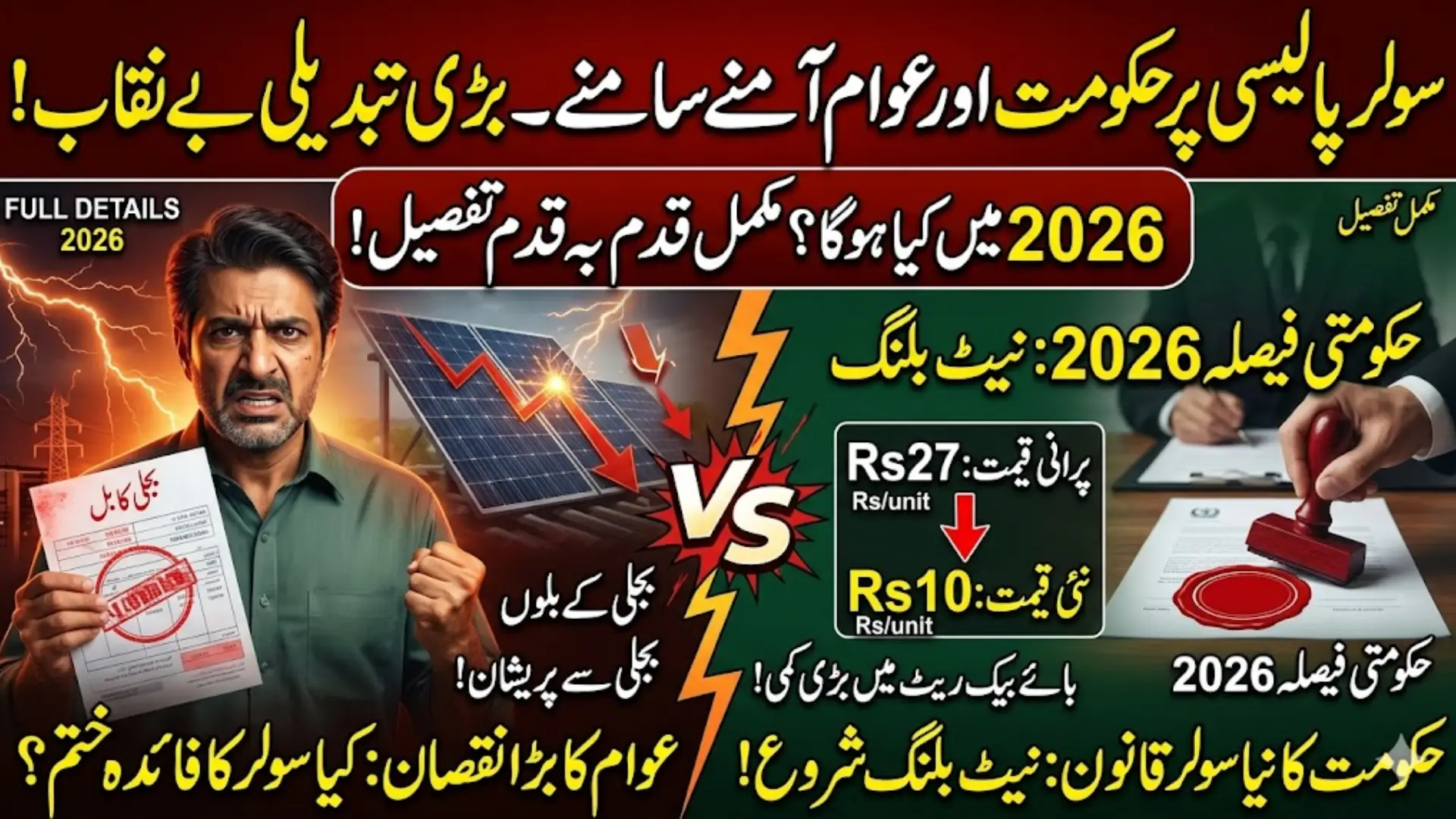
Solar Policy Pits Govt Against Public
Solar Policy Pits Govt Against Public Pakistan’s energy crisis is no longer just a technical issue; it has become a daily struggle for ordinary citizens. From small shopkeepers to factory owners and salaried individuals, everyone is feeling the pressure of rising electricity costs. Over the years, the demand for electricity has increased rapidly due to population growth, urbanization, and industrial expansion, but the supply has failed to keep pace. This imbalance has created a serious power gap that continues to grow.
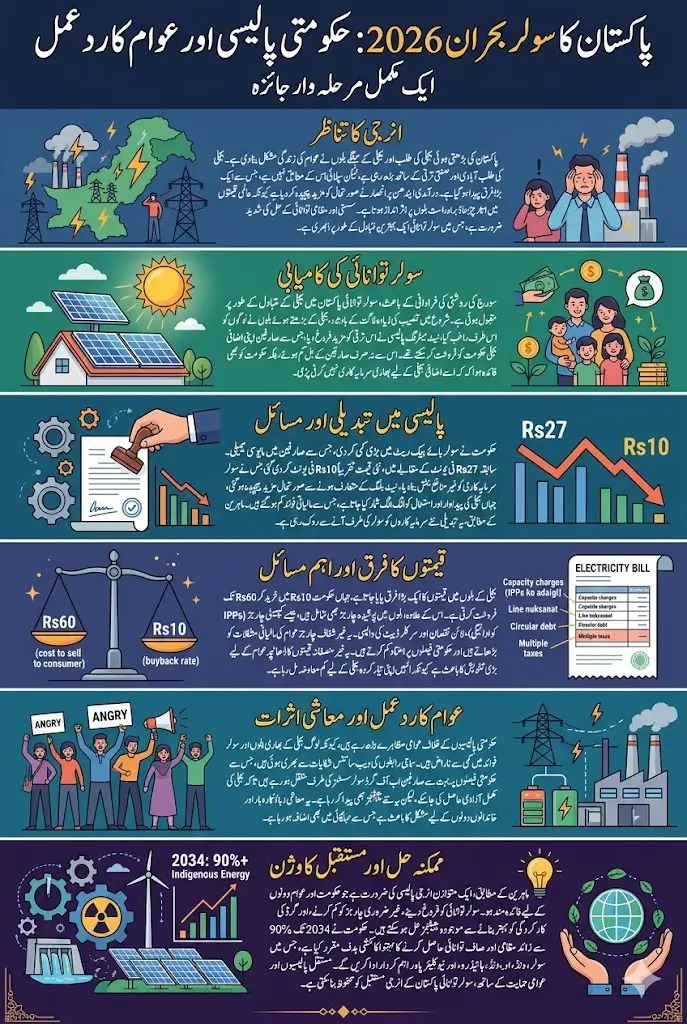
Another major concern is Pakistan’s heavy reliance on imported fossil fuels such as oil and gas. These imports are not only expensive but also unstable due to global price fluctuations. Whenever international prices increase, the impact is directly transferred to electricity bills in Pakistan. As a result, people are forced to pay more even when their usage remains the same, making energy affordability a serious issue.
- Rising demand due to population and industrial growth
- Increasing dependency on imported fuels
- Continuous increase in electricity tariffs
- Need for affordable and local energy solutions
You Can Also Read:
How Solar Energy Became a Game-Changer in Pakistan
In this challenging situation, solar energy emerged as a ray of hope for many Pakistanis. With abundant sunlight available throughout the year, solar power naturally became one of the most practical and accessible energy solutions. Initially, only a few households adopted solar systems due to high installation costs, but as electricity prices kept rising, more people started shifting toward this option.
Today, solar panels can be seen on rooftops in cities as well as in rural areas. People are generating their own electricity during the day, reducing their reliance on the national grid. This shift has not only provided financial relief to households but also helped reduce the burden on the country’s overall power system. Solar energy has proven to be both economically viable and environmentally friendly.
- Free and renewable source of energy
- Reduces dependence on grid electricity
- Long-term savings for households
- Environmentally clean and sustainable
You Can Also Read:
Net Metering Policy A Turning Point for Solar Growth
The introduction of net metering policy was a major milestone in Pakistan’s solar journey. This policy allowed consumers to connect their solar systems to the national grid and sell excess electricity back to the government. It created a strong financial incentive for people to invest in solar panels because they could recover their investment over time.
As a result, solar installations increased significantly across the country. Many households and businesses started producing surplus electricity, which was supplied back to the grid. This not only benefited consumers but also helped the government by providing additional electricity without requiring heavy investment in new power plants or infrastructure.
- Opportunity to earn through excess electricity
- Rapid increase in solar installations
- Reduced burden on government resources
- Encouragement for clean energy adoption
You Can Also Read:
Reduction in Solar Buyback Rates What Changed
The situation changed when the government decided to reduce the buyback rate for solar electricity from Rs27 per unit to around Rs10 per unit. This decision has had a major impact on the solar sector. People who had invested in solar systems expecting long-term returns now feel that their investment has been devalued.
This reduction has also discouraged new investors. Many potential buyers are now delaying or cancelling their plans to install solar systems. In countries around the world, renewable energy is supported through incentives and subsidies, but in Pakistan, this move has created uncertainty and confusion in the market.
You Can Also Read:
Government’s Strategy Shift Toward Net Billing System
The shift from net metering to net billing is another important development in Pakistan’s energy policy. Under net billing, electricity generated and consumed is calculated separately, and excess electricity is purchased at a lower rate. This system is designed to reduce the financial burden on the government but has reduced the benefits for consumers.
While the government argues that this change is necessary to stabilize the power sector, many experts believe that it discourages investment in solar energy. The balance between financial sustainability and consumer benefit has become a major point of debate in the country.
- Net billing reduces financial incentives
- Government aims to control power sector losses
- Lower return on solar investment
- Increased dissatisfaction among users
You Can Also Read:
Electricity Pricing Gap The Core Issue
One of the biggest concerns in Pakistan’s energy sector is the wide gap between the cost at which electricity is purchased and the price at which it is sold to consumers. The government buys electricity from solar producers at a very low rate but sells it at a much higher price, sometimes reaching up to Rs60 per unit depending on usage and slabs.
This pricing gap has created a perception of unfairness among the public. People feel that they are not getting a fair return for the electricity they generate. At the same time, they are burdened with high electricity bills that include various additional charges.
You Can Also Read: Maryam Ko Batain Petrol Subsidy Solving
Hidden Charges in Electricity Bills Explained
Electricity bills in Pakistan are not just based on units consumed; they include several hidden charges that significantly increase the total amount. One of the major components is capacity charges, which are paid to Independent Power Producers even if electricity is not used.
In addition to this, consumers also pay for line losses, which include electricity theft and inefficiencies in the distribution system. Circular debt and loan repayments further increase the financial burden. These hidden costs are one of the main reasons why electricity bills remain high despite efforts to reduce generation costs.
- Capacity charges to IPPs
- Line losses and theft costs
- Circular debt repayments
- Multiple taxes and surcharges
The Role of IPPs and Long-Term Agreements
Independent Power Producers have played a significant role in Pakistan’s energy sector, but their agreements with the government have created long-term financial challenges. These agreements are based on a “take-or-pay” model, which means the government must pay for electricity capacity even if it is not used.
This system has locked the government into expensive contracts, making it difficult to reduce electricity costs. As a result, the financial burden is transferred to consumers, leading to higher electricity bills and increased public dissatisfaction.
You Can Also Read: Maryam Ko Batain Petrol Subsidy 2026 – Save Rs.100 Per Liter
Solar Energy and Pakistan’s Global Commitments
Solar energy is not only important for domestic needs but also for fulfilling Pakistan’s international commitments. The country has pledged to increase the share of renewable energy under global climate agreements. Solar power plays a key role in reducing carbon emissions and promoting sustainable development.
By adopting solar energy, Pakistan can improve its global image and contribute to environmental protection. It also helps the country move toward energy independence by reducing reliance on imported fuels.
- Supports climate change commitments
- Reduces carbon emissions
- Promotes sustainable development
- Improves international reputation
You Can Also Read: Punjab CM Easter Grant 2026 New 15,000 PKR
Benefits of Solar for Remote and Rural Areas
In many parts of Pakistan, especially in remote and rural areas, access to electricity remains limited. Solar energy provides a practical solution for these regions. It allows people to generate their own electricity without relying on expensive and unreliable grid connections.
Solar systems are particularly useful in areas where extending the grid is difficult and costly. They provide electricity for homes, schools, and small businesses, improving the quality of life and supporting economic development.
Government’s Indigenous Energy Vision for 2034
The government has announced an ambitious plan to increase the share of indigenous energy sources. The goal is to achieve over 90% clean energy by 2034, with a major contribution from solar, wind, hydro, and nuclear power.
This vision aims to reduce dependence on imported fuels and strengthen energy security. However, achieving this target will require consistent policies, strong implementation, and public support.
Public Reaction and Growing Discontent
The public reaction to recent energy policies has been strong and visible. Many people are protesting against high electricity bills and reduced solar benefits. Social media platforms are filled with complaints and criticism of current policies.
This growing discontent reflects a lack of trust between the public and the government. People feel that their concerns are not being addressed, and policies are being made without considering their impact on ordinary citizens.
- Protests against high electricity costs
- Frustration over reduced solar incentives
- Lack of trust in government decisions
- Demand for fair and transparent policies
Shift Toward Off-Grid Solar A New Trend
As a result of reduced incentives, many people are now shifting toward off-grid solar systems. These systems allow users to generate and consume their own electricity without connecting to the national grid. This gives them complete independence but also comes with certain risks.
Off-grid systems may face challenges during cloudy weather or technical failures. Moreover, this trend reduces the government’s ability to manage and benefit from solar energy production, which could create new challenges for the energy sector.
You Can Also Read: United Electric Bike Price In Pakistan 2026
Economic and Social Impact of Current Policies
The impact of current energy policies is being felt across all sectors of society. High electricity costs have increased the cost of doing business, leading to higher prices for goods and services. This has contributed to inflation and reduced purchasing power for ordinary citizens.
Households are struggling to manage their monthly expenses, and many are forced to cut down on basic needs. The situation is particularly difficult for middle- and low-income groups, who are already facing financial challenges.
Key Challenges in Pakistan’s Power Sector
Pakistan’s power sector is facing multiple challenges, including financial mismanagement, outdated infrastructure, and lack of innovation. These issues have created a cycle of problems that are difficult to break without major reforms.
Without addressing these challenges, the situation is likely to worsen in the coming years. There is a need for modern solutions and better planning to improve efficiency and reduce costs.
Possible Solutions for a Balanced Energy System
To create a balanced energy system, the government needs to adopt fair and transparent policies. Encouraging solar energy, reducing unnecessary charges, and improving grid efficiency can help address the current challenges.
Experts believe that reducing dependence on expensive contracts and investing in modern technology can bring positive changes. A balanced approach will benefit both the government and the public.
You Can Also Read: Petrol Subsidy Check Online Status Using CNIC Full Details
Future of Solar Energy in Pakistan
Despite current challenges, the future of solar energy in Pakistan remains promising. The country has significant potential due to its geographical location and increasing demand for electricity. With the right policies and support, solar energy can become a major source of power.
Investment in solar technology and infrastructure can create new opportunities for economic growth. It can also help reduce electricity costs and improve energy security in the long run.
Electricity Pricing in Pakistan
| Category | Approx Value (2026) | Explanation |
|---|---|---|
| Solar Buyback Rate | Rs10/unit | Paid to solar producers |
| Previous Solar Rate | Rs27/unit | Earlier incentive under net metering |
| Consumer Electricity Rate | Up to Rs60/unit | Charged to end users |
| Capacity Charges Portion | High | Paid to IPPs even without usage |
Final Thoughts
The current situation clearly shows a growing conflict between government policies and public expectations. While the government is trying to manage financial challenges, the public is struggling with rising electricity costs and reduced benefits from solar energy.
A fair and balanced approach is the need of the time. Solar energy has the potential to solve many of Pakistan’s energy problems, but only if policies are consistent, transparent, and supportive. Bridging the gap between the government and the public will be essential for building a sustainable and secure energy future for Pakistan.
You Can Also Read: PM Housing Loan Scheme 2026 Apply Online – Know Required Documents