

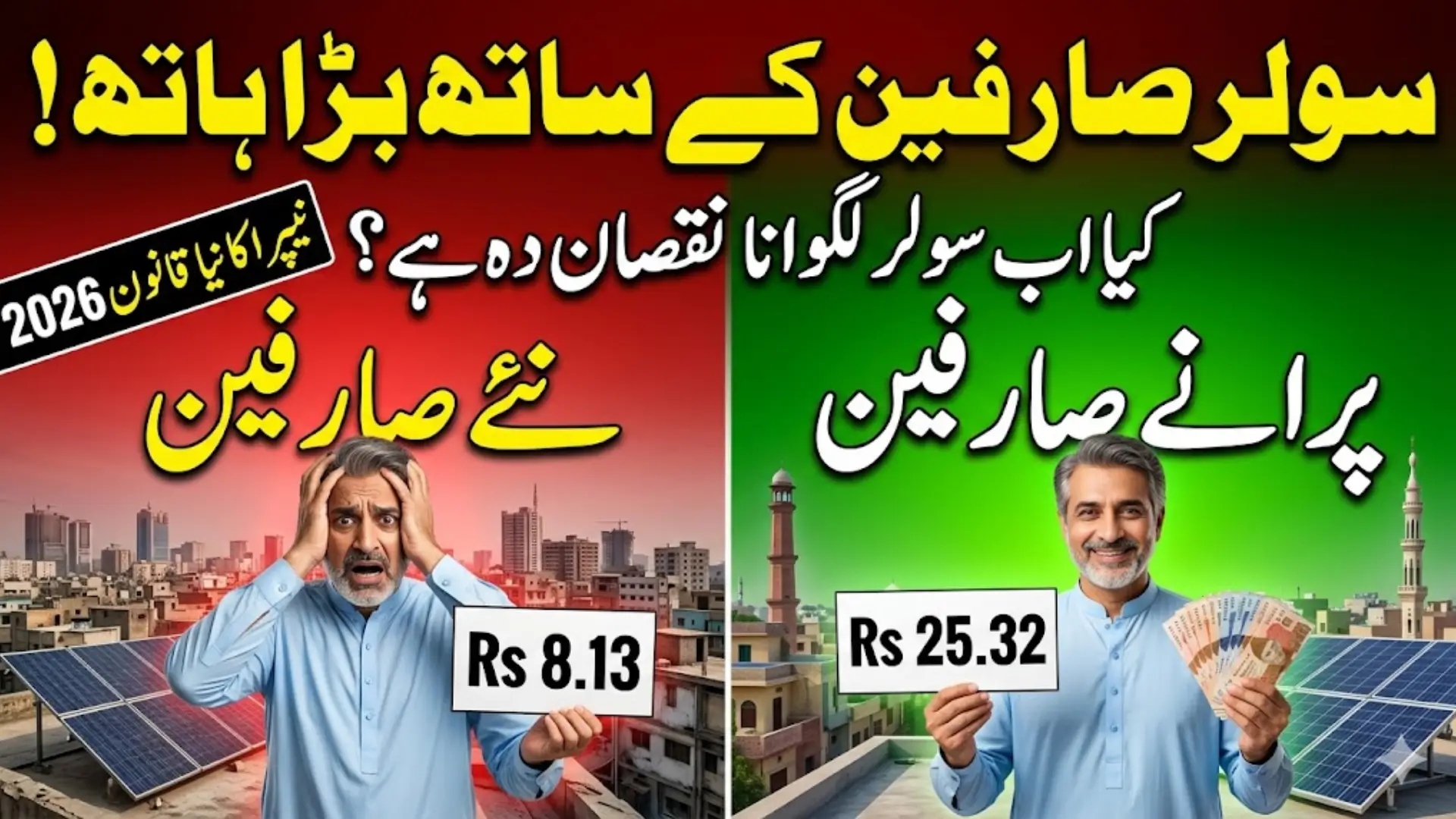
Solar Consumers New Electricity Charges
Solar Consumers New Electricity Charges Pakistan’s power sector has entered a new phase as the National Electric Power Regulatory Authority (NEPRA) introduces updated rules for solar consumers. Over the past few years, I have personally seen a massive shift toward solar panels in both big cities and small towns. Rising electricity bills, frequent load shedding, and uncertainty in unit prices pushed people to invest their savings into solar systems. Now, with the latest policy changes, many consumers are once again trying to understand whether their decision still makes sense.
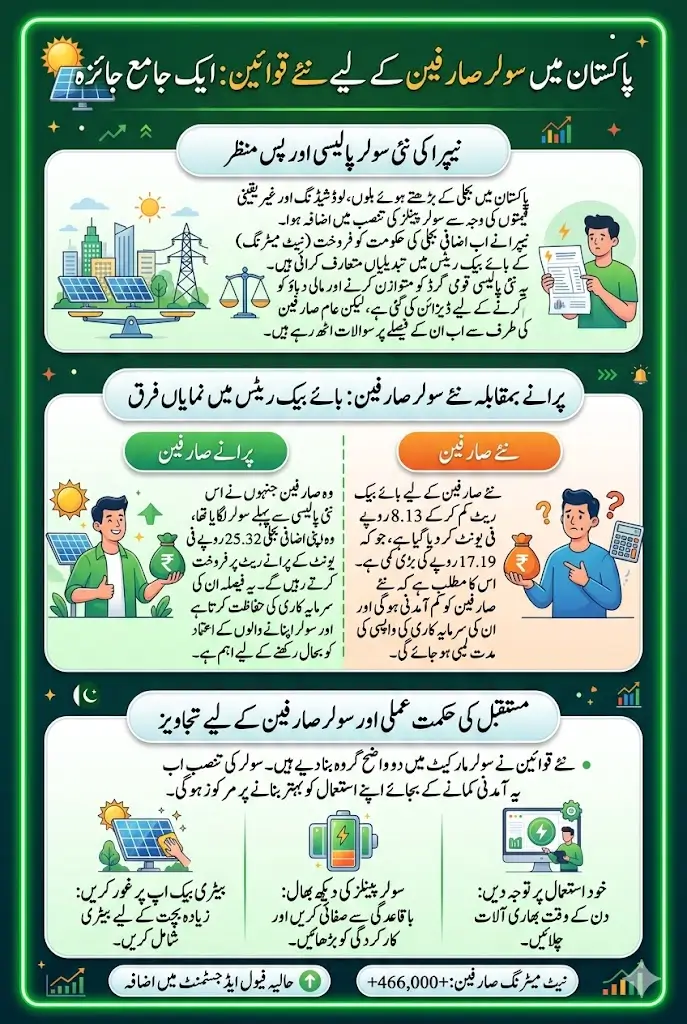
This new policy mainly focuses on revising the buyback rates of electricity for solar users. While the government is trying to balance the national grid and manage financial pressure, the common citizen is more concerned about monthly savings. The biggest change is the difference in rates for old and new consumers, which has created both relief and concern across the country.
You Can Also Read: Eid al-Adha 2026 Date Revealed in Pakistan
- New solar policy announced for 2026
- Major changes in electricity buyback rates
- Different rules for old and new consumers
- Direct impact on household budgets
Understanding NEPRA’s New Buyback Rates
To understand this policy properly, we first need to understand what a buyback rate is. In simple words, when your solar system produces more electricity than you use, that extra electricity is sent to the national grid. The government then pays you for each unit, and this payment is called the buyback rate. This system is known as net metering, and it has been a major reason behind the popularity of solar systems in Pakistan.
NEPRA has now revised these rates due to increasing solar adoption and pressure on the electricity system. From what I have observed, the government is trying to reduce the financial burden caused by high buyback rates while still encouraging renewable energy. However, this balance is not easy, and the new rates clearly show that priorities are shifting.
- Buyback rate means selling your extra electricity
- Net metering allows two-way electricity flow
- Government revises rates to control costs
- Policy aims to balance supply and demand
You Can Also Read: Oshan X7 Price Pakistan Reviews & Specs
Electricity Rates for Existing Solar Consumers
For those who installed solar systems before this new policy, there is a sense of relief. Existing consumers will continue to sell their electricity at Rs 25.32 per unit, which is the same rate as before. This decision is important because many people invested large amounts of money with the expectation of long-term savings and stable returns.
From a practical point of view, this protection builds trust. If the government suddenly changed rates for old users, it would have discouraged future investments completely. By keeping the previous rate intact, NEPRA has ensured that early adopters of solar energy continue to benefit from their decision.
- Existing users will continue at Rs 25.32 per unit
- No immediate financial loss for old consumers
- Investment security maintained
- Encourages confidence in solar adoption
You Can Also Read: 8th Class Result 2026 Check Result By Roll Number
New Solar Consumers: Updated Selling Price Details
The biggest impact of this policy is on new solar consumers. For anyone installing a solar system after the new rules, the buyback rate has been reduced to Rs 8.13 per unit. This is a sharp decline and changes the overall financial calculation for new users.
In real terms, this means that new consumers will earn significantly less from the electricity they send to the grid. Based on my understanding, this will increase the payback period of solar systems. Where earlier people could recover their investment in 3 to 4 years, now it may take much longer depending on usage and system size.
- New buyback rate set at Rs 8.13 per unit
- Reduction of Rs 17.19 per unit
- Lower earnings from surplus electricity
- Longer time to recover investment
Key Differences Between Old and New Solar Policies
This policy has clearly created two categories of solar consumers in Pakistan. On one side are those who installed solar systems earlier and are enjoying higher returns, while on the other side are new consumers who will have to adjust to lower rates. This difference will play a big role in future solar decisions.
From what I have seen in the market, many people are now rushing to understand whether they should still install solar or not. The answer depends on individual usage, but one thing is clear: the policy has changed the financial benefits significantly.
You Can Also Read: Diesel and Petrol Price in Pakistan Today Latest Rates, Trends
| Category | Existing Consumers | New Consumers |
|---|---|---|
| Buyback Rate | Rs 25.32/unit | Rs 8.13/unit |
| Profit from Extra Units | High | Low |
| Investment Recovery | Faster | Slower |
| Policy Stability | Protected | Newly Applied |
- Clear gap between old and new users
- Higher advantage for early investors
- New users must calculate carefully
- Policy may slow down new installations
Growth of Solar Net-Metering in Pakistan
Solar energy has seen massive growth in Pakistan. According to recent data, the number of net-metering consumers has crossed 466,000. This is not just a number; it reflects a major shift in how people are thinking about electricity.
In my experience, this growth is driven by necessity rather than choice. People are tired of unpredictable bills and power shortages. Solar has become a practical solution for middle-class families who want control over their electricity expenses.
- Over 466,000 solar consumers nationwide
- Rapid growth in urban areas
- Increasing awareness about renewable energy
- Solar becoming a household solution
You Can Also Read: BISP 8171 April 2026 Payment Distribution Schedule Announced
Major Cities Leading in Solar Installations
Most of the solar installations are concentrated in major cities like Lahore, Multan, Karachi, Rawalpindi, and Faisalabad. These cities have higher electricity consumption and better access to solar companies.
Urban residents are more aware of the benefits and have the financial capacity to invest in solar systems. That is why the majority of solar users are located in these areas, with Lahore alone contributing nearly one-fourth of total consumers.
- Lahore leads with 24% share
- Multan contributes 11%
- Rawalpindi holds 9%
- Karachi and Faisalabad also significant
- Urban awareness driving adoption
Pakistan’s Total Solar Power Production Overview
Solar energy is now playing a major role in Pakistan’s electricity production. The government generates around 7,000 MW through solar power connected to the grid. In addition, off-grid users are producing between 13,000 to 14,000 MW, which is a significant contribution.
From what I have observed in rural areas, off-grid solar systems are becoming very common. People who do not have reliable electricity connections are turning to solar as a permanent solution. This trend shows that solar energy is not just an alternative anymore it is becoming essential.
- 7,000 MW on-grid solar production
- 13,000–14,000 MW off-grid generation
- Solar reducing pressure on national grid
- Increasing use in rural and urban areas
You Can Also Read: BISP 8171 Biometric Payment System 2026 New Method Full Guide
Recent Electricity Price Increase by NEPRA
Along with changes in solar rates, NEPRA has also increased electricity prices by 28 paisa per unit under the fuel price adjustment mechanism. This increase will be included in upcoming electricity bills, affecting most consumers across the country.
In simple terms, this adjustment reflects changes in fuel costs used for electricity generation. While the increase may seem small, it adds up over time, especially for households already struggling with high bills.
- Increase of 28 paisa per unit
- Applied under fuel adjustment system
- Visible in upcoming bills
- Adds to overall electricity cost
Who Will Be Affected by New Electricity Charges
The latest increase in electricity prices will impact general consumers, including households and businesses. However, some categories have been exempted to protect vulnerable groups.
From my observation, this exemption is important because it provides relief to low-income families who are already facing financial pressure. At the same time, promoting electric vehicles through exemptions is also a positive step.
- Affected groups:
- Domestic users
- Commercial consumers
- Exempted groups:
- Lifeline consumers
- EV charging stations
- Policy aims to balance burden
You Can Also Read: Current Silver Rate in Pakistan: Increase and Decrease Details
Monthly Fuel Adjustment System Explained
The Fuel Price Adjustment (FPA) system is a regular feature of Pakistan’s electricity pricing. It allows authorities to adjust electricity prices based on changes in fuel costs. When fuel prices increase, electricity becomes more expensive, and when they decrease, consumers may get relief.
This system ensures transparency, but for the common citizen, it often creates confusion. Bills change every month, making it difficult to predict expenses. Understanding this system can help consumers better manage their electricity usage.
- Monthly adjustment based on fuel prices
- Direct impact on electricity bills
- Ensures cost recovery for power companies
- Can increase or decrease monthly charges
Step-by-Step Guide for Solar Consumers in 2026
Solar Consumers New Electricity Charges If you are a solar consumer or planning to install a system, it is now more important than ever to make informed decisions. The new policy requires careful planning and understanding of your energy needs.
From what I have seen, people who calculate their usage and plan properly benefit the most. Blind investment without understanding the new rates can lead to disappointment.
- Check whether you are an old or new consumer
- Review your net-metering agreement
- Calculate expected savings under new rates
- Focus on self-consumption rather than selling
- Plan system size according to your needs
You Can Also Read: Benazir Taleemi Wazaif Payment Rise 2026
Impact on Future Solar Investments
The reduction in buyback rates will definitely affect future solar investments. Many people may delay their plans or reconsider the size of their solar systems. However, this does not mean solar is no longer beneficial.
In reality, solar still helps reduce dependency on expensive grid electricity. The strategy is now shifting from earning through selling electricity to saving through self-use.
- Slower growth in new installations
- Focus shifting to self-consumption
- Longer return on investment
- Still useful for reducing bills
Important Tips for Solar Users in Pakistan
Solar Consumers New Electricity Charges Based on practical experience, smart usage of solar energy can still provide strong benefits. It is not just about installing panels; it is about how you use electricity after installation.
Consumers who adjust their habits, such as using heavy appliances during the day, can maximize savings even with lower buyback rates.
- Use appliances during daytime
- Clean and maintain solar panels regularly
- Monitor electricity production and usage
- Stay updated with policy changes
- Consider battery backup for better efficiency
Final Thoughts
Solar Consumers New Electricity Charges new policy by National Electric Power Regulatory Authority clearly shows that Pakistan’s energy sector is evolving. While existing consumers are protected, new consumers will need to think more carefully before investing in solar systems.
In my opinion, solar energy still remains one of the best solutions for Pakistan’s electricity challenges. However, the approach has changed. It is no longer just about earning money from excess electricity but about managing and reducing your own electricity costs in a smarter way.
You Can Also Read: New Electricity Meter Rules in Pakistan 2026 Install Two Meters