
How To Get Subsidy On Petrol
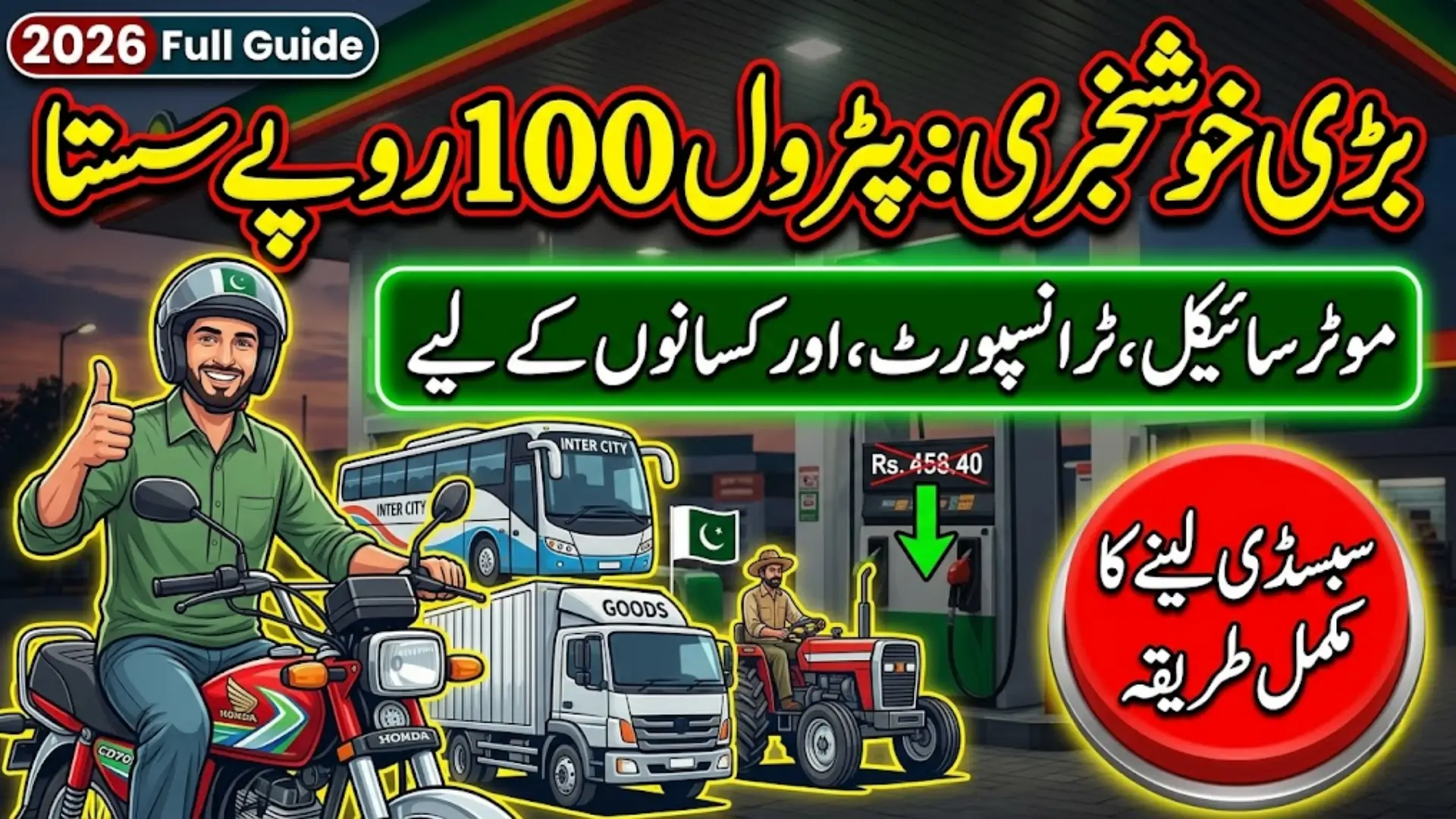
How To Get Subsidy On Petrol sudden and historic increase in petroleum prices has changed the financial reality for millions of Pakistanis. Petrol reaching Rs. 458.40 per litre and diesel climbing to Rs. 520.35 has not only affected transport costs but also increased the price of almost every essential item. From daily commuting to business logistics, the impact is visible everywhere.
In such a situation, the government has introduced a targeted subsidy program instead of a blanket relief package. This decision reflects a shift toward supporting only those groups that are directly dependent on fuel for survival and income. Motorcyclists, transporters, and farmers fall into this category, making them the primary beneficiaries.
This guide provides a complete and practical explanation of how the petrol subsidy works in Pakistan in 2026, who is eligible, and how you can benefit from it without confusion. The aim is to explain everything in a way that even a common citizen can easily understand.
You Can Also Read: AIOU Extends Deadline For Admission In April For Many Programs
Understanding the Latest Fuel Price Increase
The recent fuel price hike is one of the biggest in Pakistan’s history. Such an increase does not only affect vehicle owners but also has a chain reaction across the economy. When fuel becomes expensive, transportation costs rise, and those costs are passed on to consumers in the form of higher prices.
This situation has created serious challenges for middle and lower-income families. Daily wage earners, delivery riders, and small transporters are among the most affected segments. The increase in diesel prices has also made goods transportation more expensive, which directly impacts food inflation.
Key impacts of rising fuel prices include:
- Increase in daily commuting expenses for motorcyclists
- Rise in public transport fares
- Higher cost of vegetables, fruits, and basic food items
- Increased operational cost for businesses and factories
- Financial pressure on farmers during harvesting season
The government’s response through targeted subsidies is an attempt to control these economic pressures.
You Can Also Read: Oppo K15 Pro Price In Pakistan And Full Specs
Who Can Benefit from the Petrol Subsidy Program
The subsidy program is not for everyone. Instead, it focuses on specific groups that are most affected by rising fuel costs. This targeted approach is designed to ensure that limited resources are used effectively.
Motorcyclists are the largest group included in this package, as they represent a significant portion of daily commuters in Pakistan. Similarly, transporters who move people and goods across cities are also included to prevent a rise in fares and inflation.
The main beneficiaries of the subsidy program are:
- Motorcyclists using bikes for daily commuting or work
- Inter-city public transport operators
- Goods transport vehicles carrying essential items
- Small farmers involved in crop harvesting
- Pakistan Railways for passenger fare stability
This focused relief approach ensures that the subsidy reaches those who genuinely need financial support.
Petrol Subsidy for Motorcyclists – Complete Details
Motorcyclists are at the center of this relief package because they are the most affected by petrol price increases. In Pakistan, motorcycles are not a luxury but a necessity. Millions of people depend on bikes for jobs, deliveries, and daily travel.
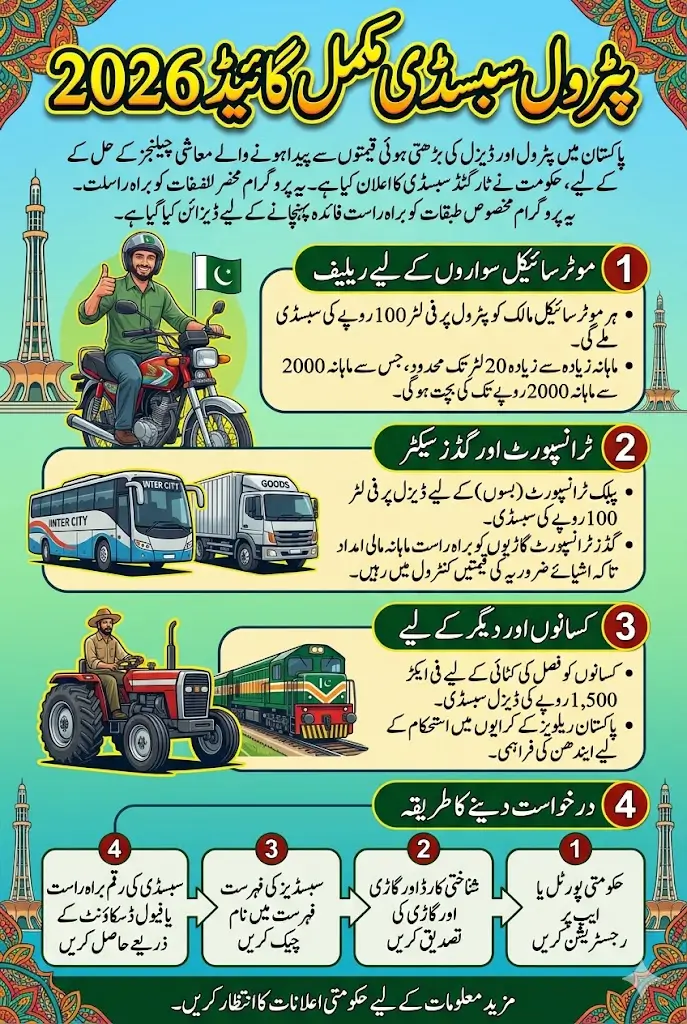
Under the new policy, the government is offering a subsidy of Rs. 100 per litre on petrol. However, this subsidy is limited to a maximum of 20 litres per month. This means a motorcyclist can save up to Rs. 2,000 every month, which can significantly reduce monthly fuel expenses.
This initiative is particularly beneficial for low-income individuals who rely on motorcycles for earning a living. It helps maintain their mobility and financial stability during a time of economic pressure.
You Can Also Read: NADRA Released Complete List of 3,000+ e-Sahulat Centers in Pakistan
Relief Package for Transport Sector Explained
The transport sector plays a vital role in connecting cities and supporting economic activity. When fuel prices rise, transport operators are forced to increase fares, which directly affects passengers.
To prevent this, the government is providing a diesel subsidy of Rs. 100 per litre to inter-city public transport operators. This step is aimed at controlling fare increases and ensuring that travel remains affordable for the public.
Important benefits of transport sector subsidy:
- Helps maintain stable ticket prices for passengers
- Supports transport businesses facing high fuel costs
- Reduces inflationary pressure on the economy
- Ensures continued availability of transport services
- Protects daily commuters from sudden fare hikes
This subsidy is expected to bring balance to the transport system and reduce financial stress on both operators and passengers.
You Can Also Read: Punjab Schools Remain Closed on Fridays
Financial Assistance for Goods Transporters
Goods transporters are the backbone of Pakistan’s supply chain. They are responsible for delivering food and essential items from farms to markets. When their costs increase, it directly affects the prices consumers pay.
To address this issue, the government has introduced direct monthly financial support for different categories of transport vehicles. This support is designed to keep the supply chain running smoothly and prevent unnecessary price increases.
The structured financial assistance is shown below:
| Transport Category | Monthly Subsidy Amount |
|---|---|
| Food Supply Trucks | Rs. 70,000 |
| Large Goods Vehicles | Rs. 80,000 |
| Public Service Vehicles | Rs. 100,000 |
This financial support will help transporters manage fuel expenses and continue operations without passing the full burden onto consumers.
Diesel Subsidy for Farmers – Key Information
Farmers are facing increasing challenges due to rising diesel prices, especially during harvesting season. Agricultural activities depend heavily on fuel, and any increase in cost can reduce farmers’ profits and affect crop production.
To support this sector, the government is offering a one-time diesel subsidy of Rs. 1,500 per acre. This subsidy is specifically designed to help farmers manage harvesting costs and maintain productivity.
This initiative is important because agriculture is directly linked to food security. By supporting farmers, the government is also working to control food prices and ensure stable supply in markets.
You Can Also Read: Jaecoo J5 Price In Pakistan 2026 Specs
Support for Pakistan Railways
Pakistan Railways has also been included in the relief package to ensure that train travel remains affordable. With increasing fuel costs, railway operations become expensive, which can lead to higher ticket prices.
By providing fuel support, the government aims to reduce operational pressure on railways and protect passengers from fare increases. Railways serve as an economical travel option for millions of people, especially those who cannot afford expensive road transport.
This step also encourages the use of public transport, which can reduce overall fuel consumption and traffic congestion.
Step-by-Step Process to Apply for Petrol Subsidy
Although detailed procedures are expected to be announced officially, the application process will likely be simple and accessible. The government is expected to use digital systems to ensure transparency and ease of use.
Expected application steps include:
- Register through an official government portal or mobile app
- Provide CNIC and vehicle registration details
- Complete verification process
- Receive subsidy through direct transfer or fuel discount system
- Stay updated with official announcements for deadlines
Applicants should ensure that their personal and vehicle records are accurate to avoid delays.
Key Conditions and Limitations of the Scheme
While the subsidy program provides relief, it is not without conditions. These limitations are necessary to ensure that the system is fair and sustainable.
Key conditions of the scheme:
- Subsidy is limited to specific groups only
- Monthly fuel limits are strictly applied
- Verification of eligibility is mandatory
- Misuse of the system may lead to penalties
- The program may be temporary depending on economic conditions
Understanding these conditions is important for anyone planning to apply for the subsidy.
How This Relief Package Impacts Daily Life
The relief package is expected to bring some stability to daily life. While it may not completely eliminate the burden of high fuel prices, it offers meaningful support to those who need it the most.
Motorcyclists will experience reduced fuel expenses, transport fares may remain stable, and farmers will find it easier to manage harvesting costs. These changes can help control inflation and support economic activity.
Overall, the subsidy acts as a short-term solution to manage the immediate impact of rising fuel prices.
Government Strategy Behind Targeted Subsidies
The government’s decision to provide targeted subsidies instead of a general subsidy reflects a strategic approach. With limited financial resources, it is not possible to support the entire population equally.
By focusing on specific sectors, the government aims to maximize the impact of its spending. This approach also helps in reducing waste and ensuring that benefits reach deserving individuals.
The strategy highlights the importance of economic planning and responsible financial management in challenging times.
Challenges and Public Concerns
Despite the benefits, there are concerns about the implementation of the subsidy program. Many people are worried about transparency, accessibility, and fairness in distribution.
Common concerns among the public include:
- Delay in subsidy distribution
- Difficulty in registration for rural populations
- Lack of awareness about the program
- Risk of corruption or misuse
- Need for proper monitoring and accountability
Addressing these challenges will be essential to ensure the success of the program.
Final Thoughts
The government’s petrol subsidy program for 2026 is a timely step to provide relief during a period of economic stress. While it may not fully offset the impact of high fuel prices, it offers targeted support to key sectors.
For motorcyclists, transporters, and farmers, this relief can make a real difference in managing daily expenses. However, long-term solutions will be needed to address the root causes of rising fuel prices.